Attack Tables
Firearms
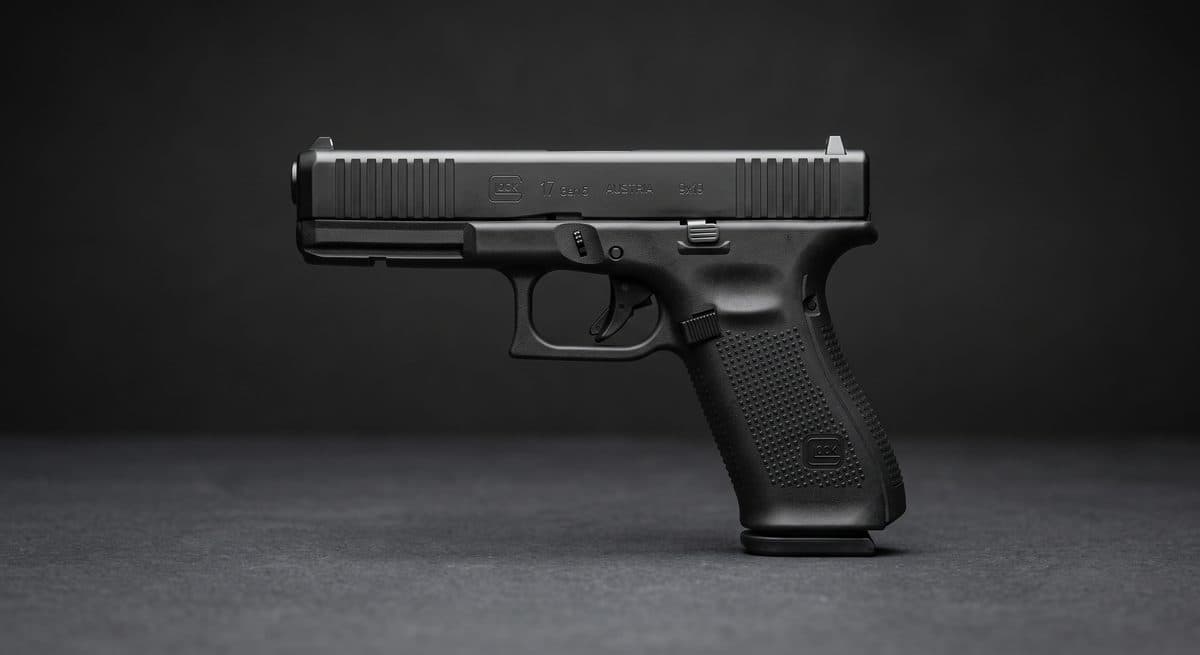
Glock 17
9mm semiautomatic pistol
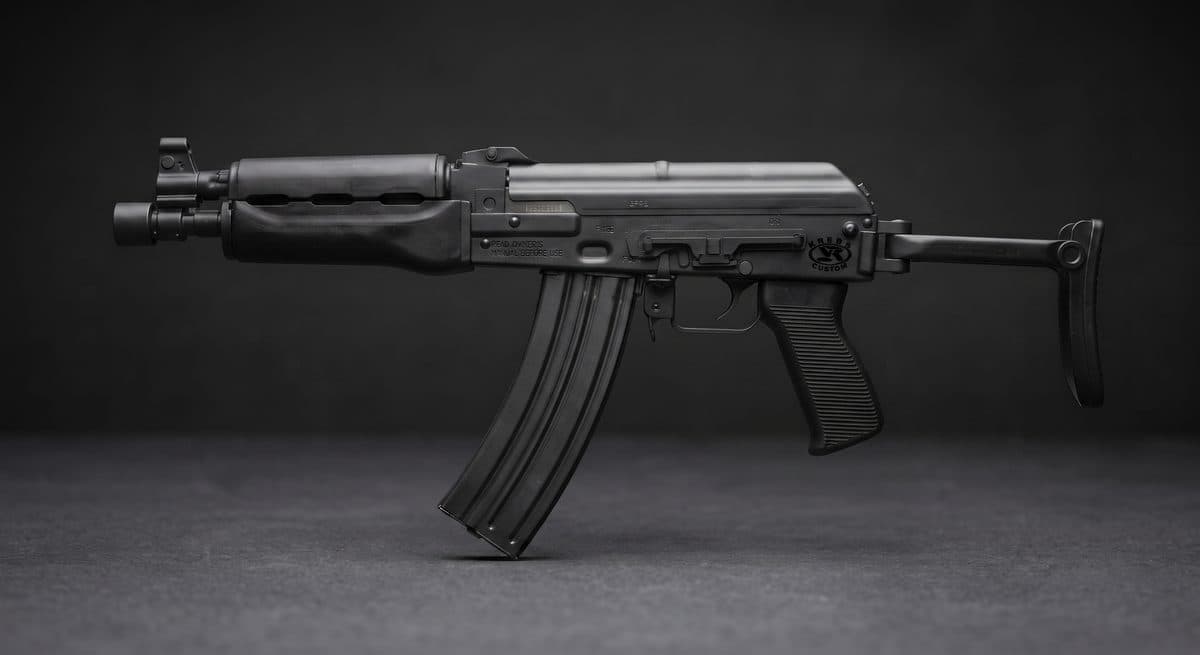
Zastava M85
9mm selective-fire SMG
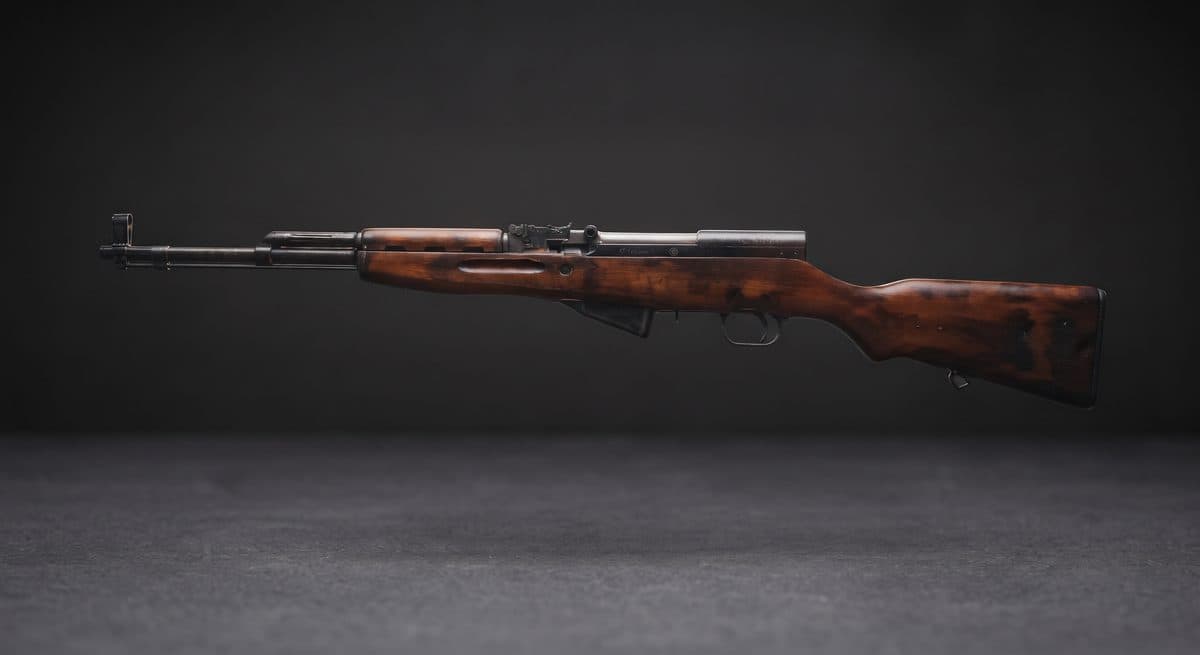
SKS-46
7.62x39mm semiautomatic rifle
Shotgun
12-gauge, pattern and slug
Explosives
Thrown, not aimed, and resolved without an Offensive Bonus — the rank count alone adds, a point per rank, so seven ranks of Ranged Weapon: Thrown is +7 on the table. Armor is read column by column against fragments only — heat and overpressure barely notice what a target was wearing — so fragmentation is the one explosive here with a table of its own.

Critical Tables
For a gun, which of these a hit rolls on depends on the round and on what the target was wearing — the ballistic body armor rules on Combat make that call, routing a stopped bullet from Puncture to Impact. An explosive does not ask: its table names its own criticals outright, and the fragmentation grenade names two.
Ballistic Puncture
Criticals for ordinary ball rounds

Ballistic Hollowpoint
Criticals for expanding rounds
Armor Piercing
Criticals for armor piercing rounds
Ballistic Shrapnel
Criticals for grenades, shotguns and automatic fire
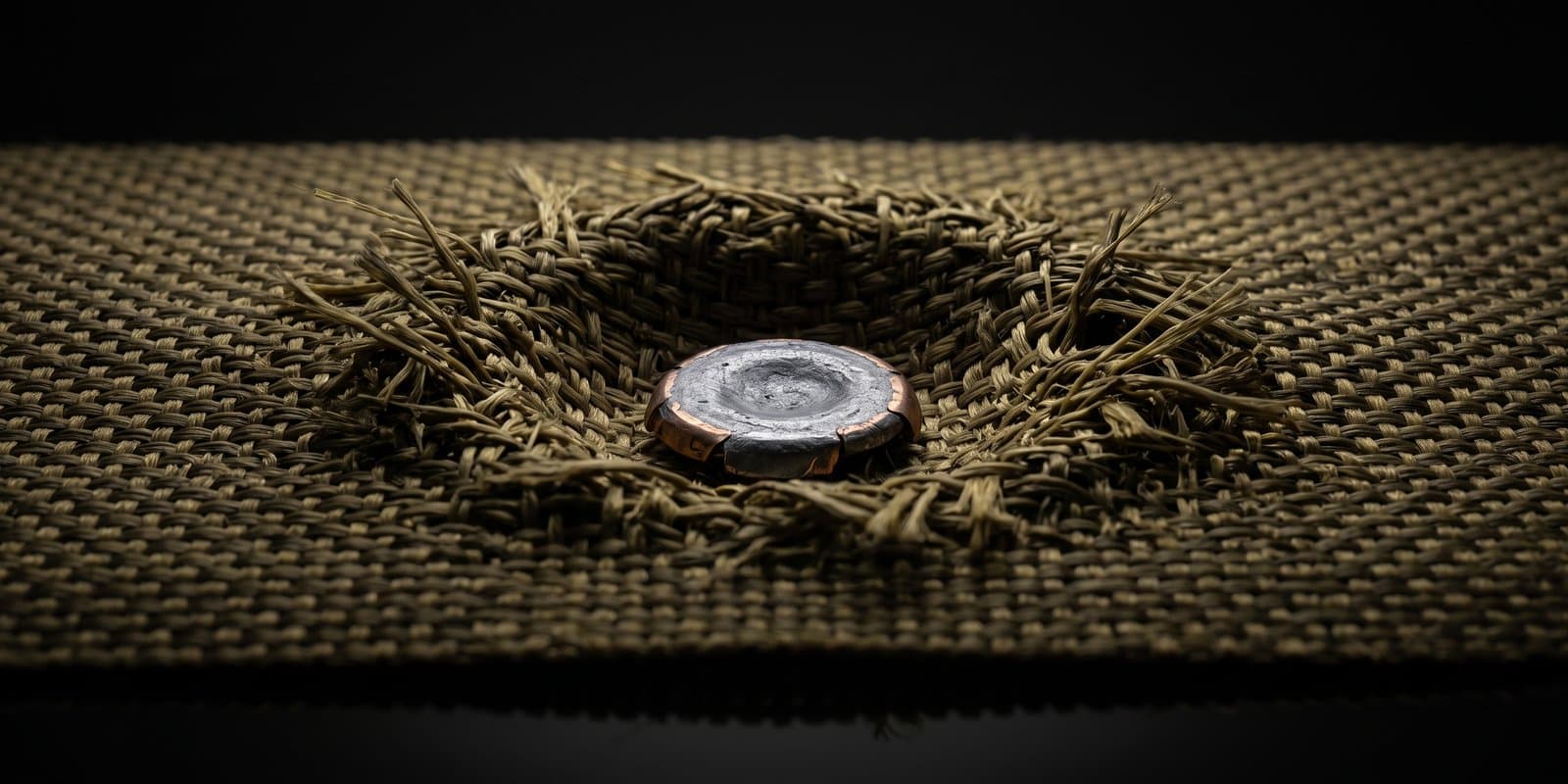
Ballistic Impact
Criticals for bullets stopped by body armor
Reading the Tables
The firearms are converted from Weapon Law: Firearms (RMSS #5524) to the current RMU format; the fragmentation grenade is built on the chassis of RMU's own Ball attack table instead, since an area attack adds only its rank count where a gun adds a whole Offensive Bonus, and needs the lower ceiling that goes with it.
Every matrix here is a Medium attack — an ordinary human with the weapons they carry, and, for the grenade, the size RMU prints on the Ball chassis it is built from, an area attack being sized in its own right rather than by whoever threw it. It is the matrix you read whatever you are shooting at. Size enters through the critical, not through the table: against a target one size larger the severity drops a level, and another for every size beyond that; against a smaller target it climbs the same way. Kindred count as Big, so a critical against one lands one level lower — a C becomes a B — while the hits are read off the table at face value RMUCore Law 9.4 and Table 9-4b (p. 165): severity moves on two counts, how big the attack is and how big the target is - a Big target is -1, Large -2, Huge -3, with the mirror against targets smaller than the attack. The hits multiplier belongs to the ATTACK's size (Table 9-4a, p. 164), which is why none applies here: a human with a gun makes a Medium attack whatever it is aimed at. RMU's optional Small and Big matrices bundle that multiplier with the severity step (x0.75 and x1.5, p. 183) and are not used here; a Kindred's size is carried by the hit-point pool instead, figured at Big on Core Concepts.
Where a severity falls below A, read the critical table's A column and step down it until you reach a result that strikes the same part of the body. A target smaller than the attack is also harder to hit, gaining +5 DB for each size category of difference RMUCore Law 9.4 (p. 165): a critical pushed under A is resolved by descending the A column to the first result hitting the same body area (see also Section 9.8). The same page gives the +5 DB per size category smaller than the attack, from Table 9-5; a change to the attack's own size from charging or magic moves the critical adjustment but not that DB.
The same thing happens at the other end. Critical tables stop at E, but an attack table can read F or higher: the SKS-46 does in its top four bands, and the fragmentation grenade in ten of its own, reaching G. A result above E is an E critical plus a second one, and the second climbs with the result rather than sitting a fixed step below it:
| Attack table reads | Resolve as |
|---|---|
| F | E + A |
| G | E + B |
| H | E + C |
| I | E + C + A |
| J | E + C + B |
Every critical from one attack shares the same roll, so they all land on the same part of the body — a hit that shatters an arm and burns it, not one that shatters an arm and burns a foot. Where a weapon lists more than one critical type, they are used in the order listed RMUCore Law p. 175 and Table 9-8a, High Criticals: the critical tables stop at E where an attack table can point as high as J, resolved as an E plus a secondary whose type need not match. All criticals from one attack use the same roll and modifiers and therefore the same location.
A roll can also run off the end of a table, and nothing about it is wasted. Every full 5 points past the last band adds +1 to the critical roll, and the count rounds up — so a single point over is already +1, not nothing. It stacks with any other critical modifier. The last band is 175 on the firearms and 125 on the fragmentation grenade, whose chassis takes ranks in place of an Offensive Bonus and so tops out fifty points lower RMUAbsolute Hit, Core Law p. 163: a total attack roll over 175 gives +1 to the critical roll for every 5 above 175, rounding up, stacking with other critical modifiers. RAW names 175 literally rather than 'the table's last band'. Reading it as each table's own ceiling is this conversion's, and it is the reading that applies to the 125-ceiling Ball chassis.
A grenade comes to 138. That is 13 past the 125 band, and 13 over 5 is 2.6 — rounded up, +3 on the critical roll. A rifle at 177 is 2 over 175: still +1.
Point blank reaches 10' for pistols, shotguns, and SMGs, and 20' for rifles and longer guns, and what it is worth runs +40 down to +10 by weapon class — the ladder is on Combat. The other ranges are given as increments: Medium is twice Short, Long three times, and so on.
Explosives keep the range increments but lose point blank — standing next to a grenade is priced by its blast radii, not by a bonus to hit — and no Offensive Bonus reaches the detonation, only the ranks. Grenades & Explosives on the Combat page carries the machinery they share: the placement maneuver, the scatter, the blast bands and the fuse.